

 REQUEST INVITE
-1.png)
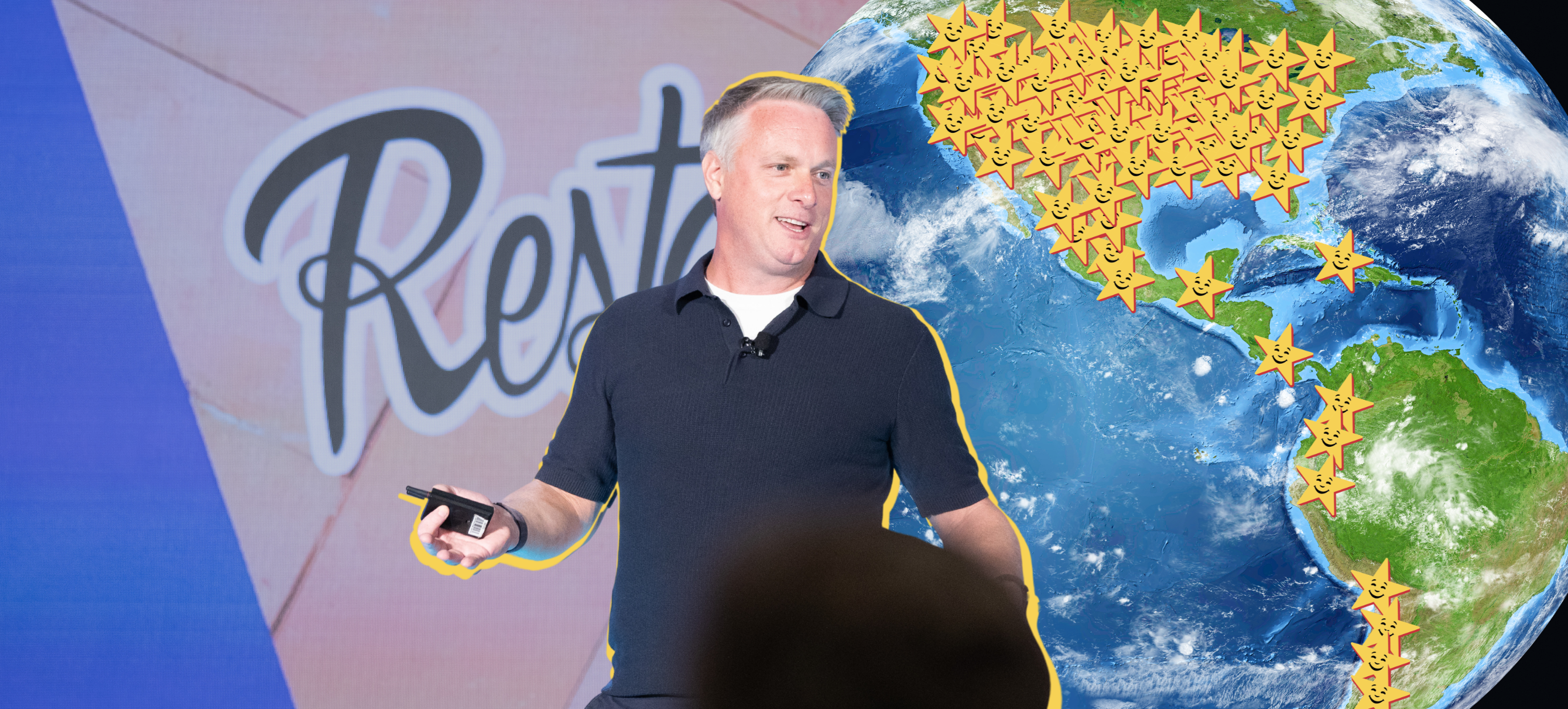
KFC operates 34,000 restaurants across 150 countries, the largest geographic footprint of any restaurant chain in the world. Somewhere on the planet, a new KFC opens roughly every three and a half hours. Nearly 10,000 have opened in the last five years alone. At that pace, design cannot be improvised.
At RestaurantSpaces, Nivera Wallani, Chief Development Officer at KFC, broke down the framework that makes a build of this scale possible, and what it takes to double it.
The Framework: Brand, Context, Culture
Wallani's design philosophy rests on three layers, applied in order. Brand first: no matter what country a guest walks into, the restaurant has to read as distinctly KFC. Context second: the format has to fit the trade zone, whether that means an 11,000-square-foot flagship or a standard free-standing drive-thru. Culture third: local nuance has to be built in deliberately, not bolted on.
Operationally, that framework runs on an 80/20 split. Eighty percent of every design follows global standards, giving development teams and franchisees a consistent, replicable system. The remaining 20 percent is local flex, room for a market or franchisee to adapt the experience so it feels native rather than imported. The ratio lets consistency and localization coexist.
Data Decides the Format Before Anyone Picks a Site
KFC calls its site selection process data-driven market mapping. It layers demographics, population movement, interest in Western quick service brands, and category growth projections to build what Wallani calls a "white space map" of viable trade zones. The output isn't just a location. It decides the type of restaurant before a single design decision is made.
The clearest example: a flagship near the Trevi Fountain in Rome, a site that took the franchisee 24 to 36 months to secure. The data confirmed the location needed to serve an international visitor base of roughly 21 million people a year, which drove the decision to build an 11,000-square-foot, multi-level, heavily digital flagship rather than a standard format. In other parts of Europe and Latin America, the same data process points toward free-standing drive-thrus instead.
Wallani also pointed to something most chains can't replicate: KFC's existing footprint across so many cities, formats, and demographics functions as a structural data advantage. Every new market benefits from pattern recognition built on thousands of prior locations.
Flagships Earn Their Keep, but They're Not the Strategy
The Rome flagship is the kind of project that gets the most attention on a slide deck, and Wallani was clear about why it works: prime, hard-to-secure locations drive traffic, elevate brand perception, and post some of the highest annual unit volumes in the system. KFC has similar flagships in the Czech Republic and across from the pyramids in Cairo.
But flagships are not where the growth math happens. The bulk of KFC's footprint, and nearly all of the next 10,000 restaurants, will be core formats: free-standing drive-thrus, in-lines, urban in-lines, and food courts.
That's why Wallani's team treats restaurant design as a modular system rather than a single fixed blueprint. The exterior, front of house, middle of house that connects the kitchen to the guest, and back of house are all designed as separate components. Each module can be refined independently, allowing the same design system to adapt to a flagship in Rome or a roadside drive-thru in Latin America without starting from scratch.
Designing for a Generation That's Overstimulated and Under-Connected
Asked how KFC designs for Gen Z and Gen Alpha, Wallani didn't start with aesthetics or technology. She started with attention. Today's younger consumers have more information, entertainment, and content competing for their attention than any generation before them. The challenge isn't adding to the noise. It's creating an experience worth choosing.
Her approach has three parts: create spaces that stand out without overwhelming guests, make every digital touch point—from ordering and pickup to loyalty—as frictionless as possible, and design restaurants where digitally connected but often socially isolated people actually want to spend time together, whether that's a solo diner, a group of teenagers, or a family.
Franchisee Buy-In Starts Before the Standards Do
With a global design playbook this structured, getting thousands of franchisees to adopt it takes more than simply telling them what to do. Wallani's team starts with co-creation. New formats and design changes are pressure-tested with franchisees before they become standard, not after. That's followed by a clear business case. After all, franchisees are entrepreneurs building businesses, not just operators following a brand guideline. The standards and the 20 percent local flexibility come last, once franchisees have had a hand in shaping what they're being asked to build.
The bigger takeaway Wallani returned to repeatedly was that unit economics are what really drive growth. When a restaurant design delivers strong returns, franchisees reinvest. That reinvestment, not the design system alone, is what ultimately doubles a brand's footprint.
What This Means for Anyone Building at Scale
Few brands operate at KFC's scale, but the lessons apply no matter the size of the business. Scale doesn't start with opening more locations. It starts with building a system that can support them.
Let data shape the right restaurant format, not just the address. Build a design system that can adapt across markets instead of relying on a single prototype. And give franchisees a reason to keep investing by involving them in the process, because the best playbook is the one people actually want to use. That's how growing brands scale with consistency instead of complexity.

Posted by
Chain Restaurants Reimagined.
The Retreat to Reimagine Restaurant Development, Design + Technology.
Oct 18-20, 2026 | Amelia Island, FL

-May-05-2026-12-48-02-5811-PM.png)



Comments