
 REQUEST INVITE
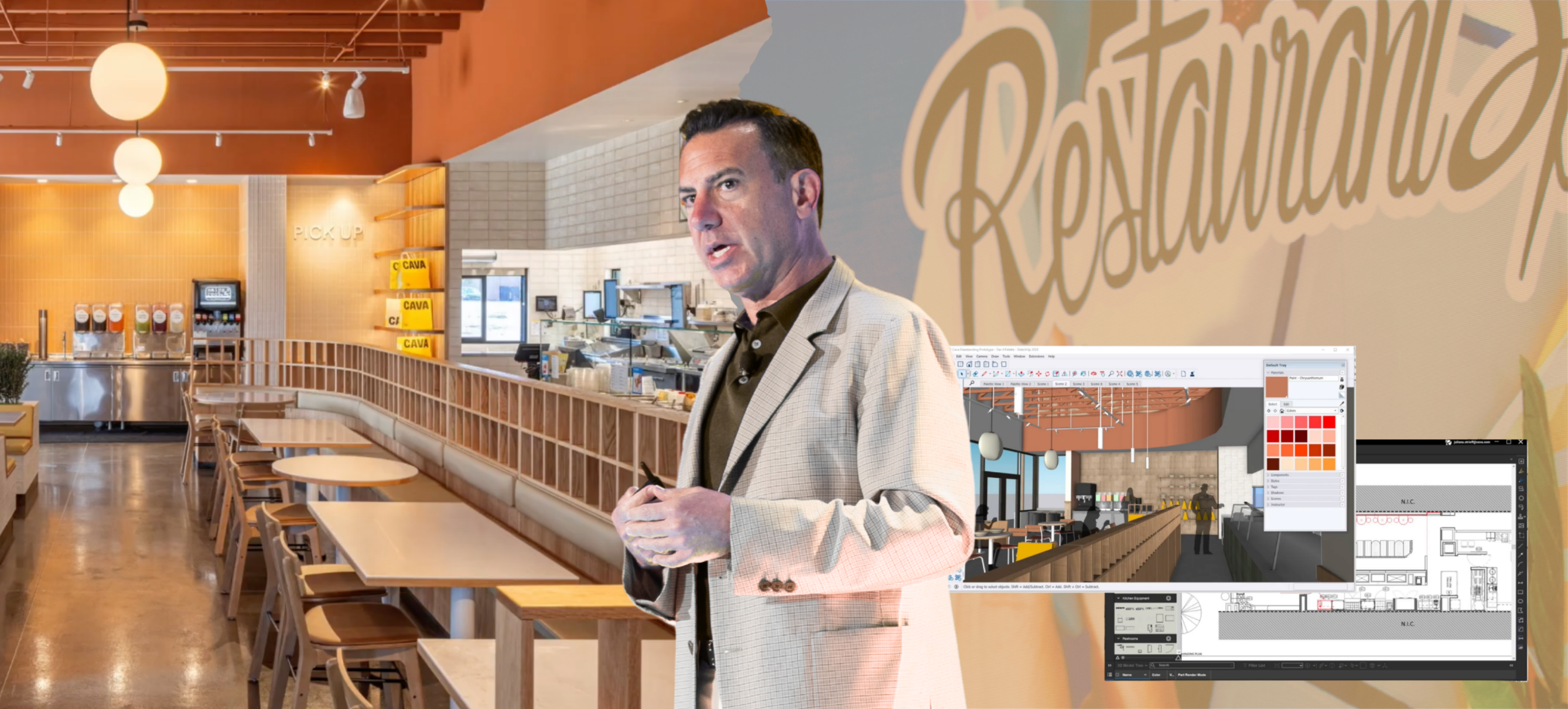
Two years ago, Jeff Gaul walked into a CAVA and had an uncomfortable thought: close your eyes, open them, and you could be standing in a Chipotle. Plywood, stainless steel, dark colors. Nothing about it said Mediterranean. Nothing said CAVA.
At RestaurantSpaces, Gaul, Chief Development Officer at CAVA, laid out exactly how the brand fixed that, and what the fix looked like in practice, from prototype design to overnight retrofits to a cardboard kitchen built in a Brooklyn office..
Start with a Clear Target, Not a Mood Board
When CAVA launched Project Soul, the design brief was specific: bring the Mediterranean to life without doing the obvious version of it. No Athena on the walls, no blue and white everything. The reference point was the Greek villages the founders grew up in, the ones they return to every summer. Sun-washed colors, yellows, sand, soft light. That specificity mattered. It gave the design team something concrete to push against.
To get it right, they hired an architect from Greece. The result is a set of signature design elements now consistent across all new locations: a 12-foot olive tree as the centerpiece, breeze block detailing common in Greek architecture, terracotta tones, soft upholstered seating with bolsters, live plants, and lighting that transitions from daytime to evening. That last detail, dynamic lighting, is something you typically find in fine dining. CAVA is doing it at fast casual scale, and it changes the dinner experience in a way that most QSR interiors never attempt.
The seating layout was also thought through for specific use cases. Solo bar seating for urban lunch traffic. Family-sized tables. Two and four tops. A chevron arrangement in some locations so diners are not sitting directly adjacent to the ordering line. The goal was to avoid the fishbowl feeling common in walk-the-line formats, where seated guests feel like they are inside the operation rather than apart from it.
Build It in Cardboard First
Before committing to any new layout configuration, CAVA's team built three full-scale cardboard kitchens in their Brooklyn office. They hired a professional cardboard artist who recreated everything: the fryer, the juice station, the seating, the ordering line. Every element was on wheels. The design team and operations walked through it together, pushed things around, argued about sightlines and flow, and resolved it before anything touched a real build.
It sounds like a lot of effort for something that ends up in a recycling bin. But the cost of a cardboard prototype is trivial compared to the cost of realizing a workflow problem after opening. The approach is also worth noting as a cross-functional alignment tool. Having operations and design in the same room, physically walking the space before it exists, surfaces conflicts that would not come up in a drawing review.
They are now adding a permanent innovation kitchen near their DC office where new equipment, technology, and small wares can be tested before deployment. The cardboard phase and the innovation kitchen serve different purposes but the same principle: validate before you commit.
Retrofit Legacy Locations Without Closing
CAVA's new-build design is not the hard problem. The hard problem is the existing portfolio. For legacy locations that predate Project Soul, they developed a retrofit program called Sun-Kissed. It brings the look and feel of the new concept to older restaurants without a full gut renovation: new canopy system, updated tables and chairs, better lighting, millwork, tile. The kitchen stays mostly in place.
The operational constraint they built around is revenue. All Sun-Kissed work happens at night. The restaurant closes, the crew comes in, the work gets done, and the restaurant opens the next morning. The full program takes about three weeks per location. For a chain CAVA's size, targeting meaningful penetration of the legacy fleet, the ability to do this without dark days is not a nice-to-have. It is the entire program.
The same nighttime logic applies to equipment upgrades. CAVA currently has older restaurants with smaller grills that cannot handle current volume. They are swapping out 60 of those over the course of a single month, all done overnight. The discipline required to run that kind of program at pace comes down to planning density: knowing the exact scope, sequencing the crew, and having every piece of equipment staged before the restaurant closes.
In-House Design, Competitive GCs
CAVA does everything in-house through the design phase: their internal design team owns the concept and produces the drawings, supported by a technology stack that includes SketchUp for 3D modeling, Bluebeam for document management, and Matterport for site documentation. Architects of record in the field handle local compliance. General contractors are competitively bid on each project. The Sun-Kissed refreshes and equipment programs use outside resource teams.
The in-house model matters at their growth rate. CAVA opened 82 locations last year and is targeting over 100 next year, all corporately owned, none franchised. At that pace, the design team cannot operate as a service bureau that waits for requests. They have to be running parallel workstreams on new builds, retrofits, and equipment upgrades simultaneously, which requires internal ownership of the design standard and a clear handoff model to field partners.
The Bigger Lesson: Design Is a Brand Protection Function
The throughline in everything Gaul described is that design decisions at CAVA are not driven by aesthetics alone. The cardboard prototyping is about operational accuracy. The nighttime retrofit program is about protecting revenue during a brand refresh. The Sun-Kissed program exists because an inconsistent fleet is a brand problem, and brand problems become development problems when you are trying to open in new markets.
The takeaway is not the olive tree or the breeze block. It is the discipline behind them: a specific design point of view, a clear method for testing before building, a retrofit program engineered around operational constraints, and a model that scales. CAVA is at 460 locations and targeting 1,000 by 2032. The design and construction infrastructure has to be built to match.

Posted by
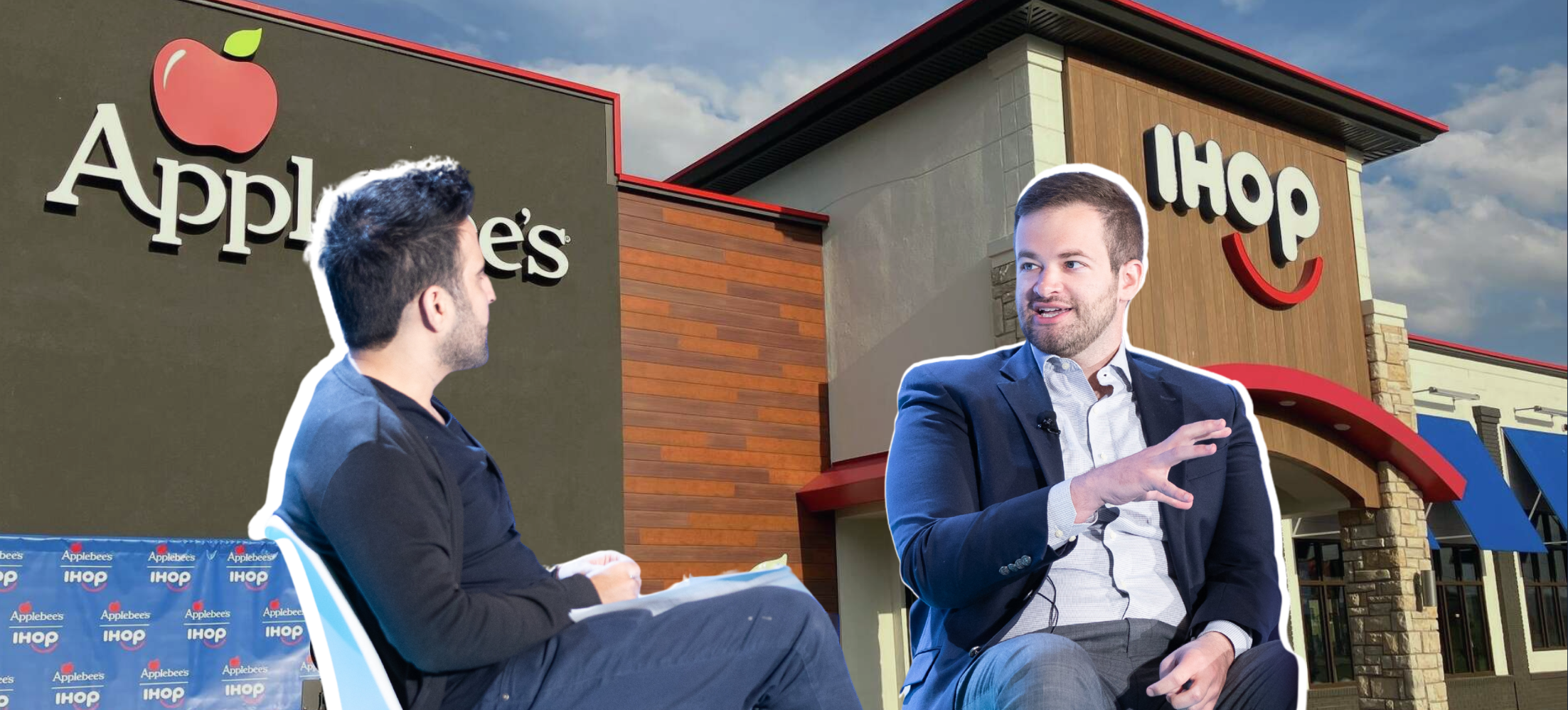
Chain Restaurants Reimagined.
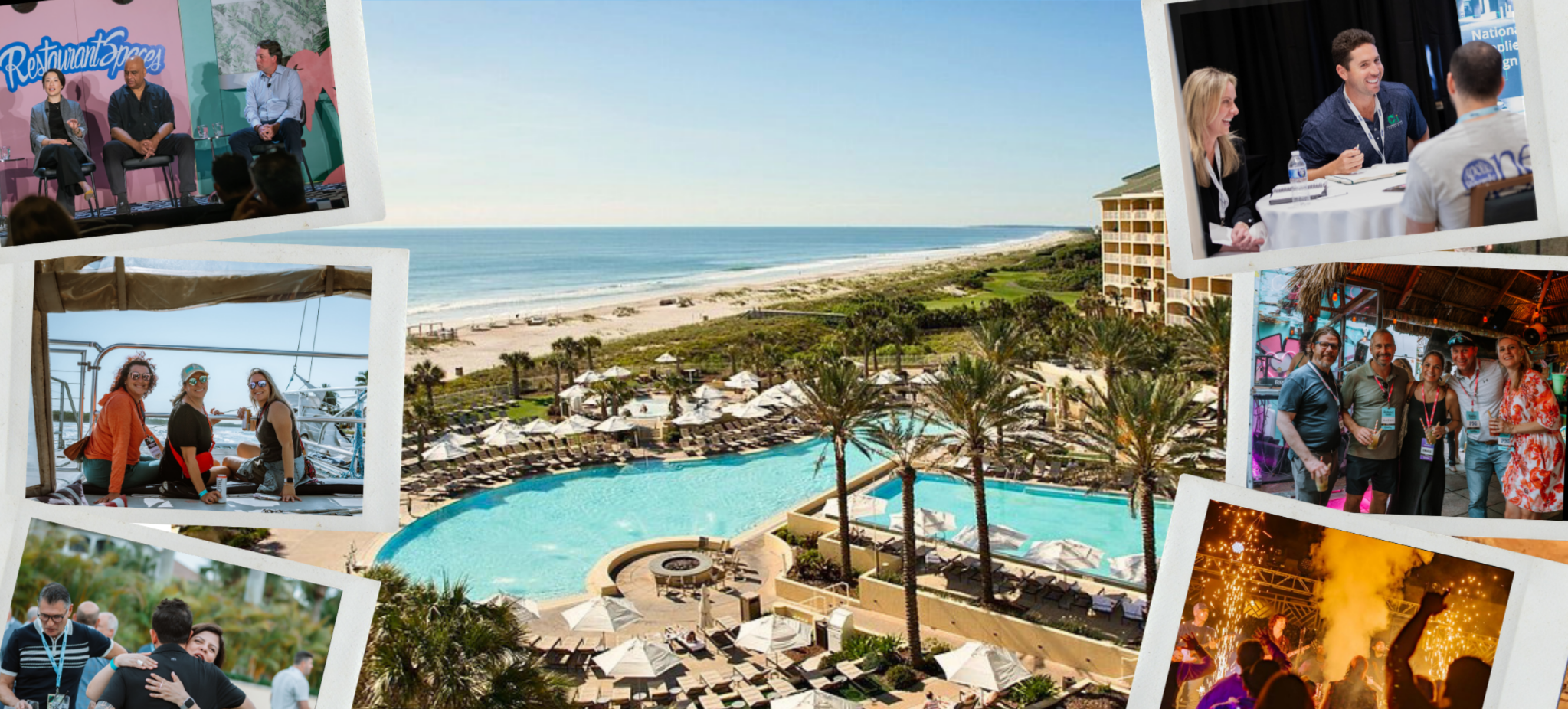
The Retreat to Reimagine Restaurant Development, Design + Technology.
Oct 18-20, 2026 | Amelia Island, FL

-1.png)
-May-05-2026-12-48-02-5811-PM.png)



Comments