

 REQUEST INVITE
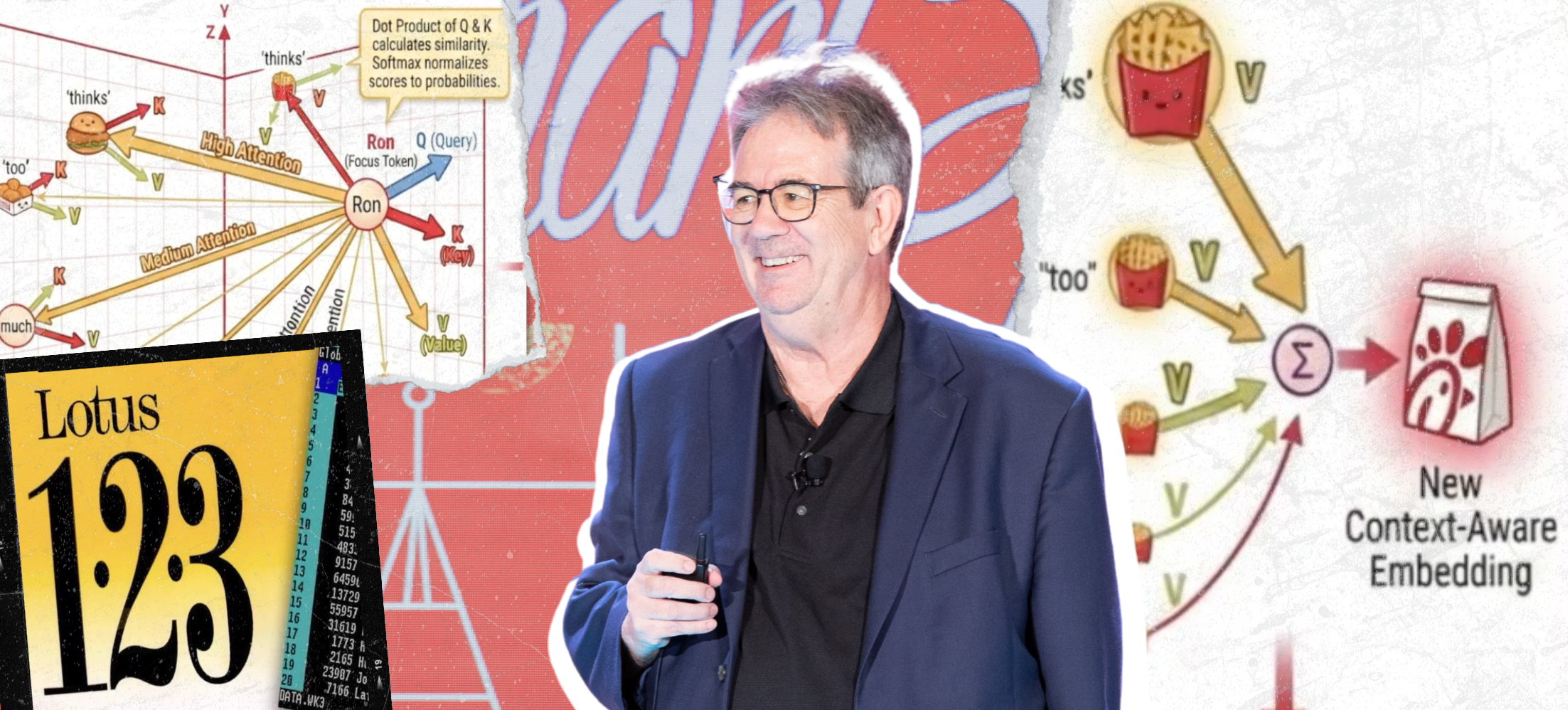
You have probably heard enough about AI to last a decade. Ron Galloway, who has been working in artificial intelligence since his 20s and is now in his fifth decade of it, came to RestaurantSpaces to talk about something most of the room had not heard of yet: agentic AI. Not the kind that answers your questions. The kind that wakes up in the morning, decides what needs doing, and goes and does it. His argument: this is the shift that will actually change how restaurant construction and design teams work. And it is about three months old.
What 'Agentic' Actually Means
Standard AI, the kind most people use daily, responds to prompts. You ask, it answers. Agentic AI is different. You give it context about a goal, and it starts working toward that goal without being asked again. It figures out the next logical task, executes it, and keeps going. Galloway described waking up to find his AI agent had found and translated a Chinese research paper overnight, then downloaded a tool it needed to do so, without being told to. "That's agentic AI," he said. "It takes the ball and runs with it."
The key ingredient is context. Instead of prompting the AI with everything it needs to know each time, you give it a thorough picture of your work, your goals, your project, and it operates from that. For a restaurant construction team, that context would be your project data, your permitting landscape, your procurement requirements. The agent works within that world, not the entire internet.
What It Can Do for Restaurant Development Teams Right Now
Galloway walked through several examples already being used in construction-related industries. These aren't future concepts. They're happening today.
- Permitting: Teams upload a complete permit set, including floor plans, structural drawings, and HVAC plans. The AI agent reviews local building codes, checks the drawings against those requirements, flags potential issues, and catches them before they're submitted. Instead of spending weeks going back and forth with plan reviewers, teams can solve many problems before the plans ever leave the office.
- Site selection: One restaurant brand uses an AI agent to evaluate potential locations. It analyzes real estate data, foot traffic, and mobility patterns, then compares those sites to the brand's highest-performing restaurants to predict how a new location is likely to perform. It keeps running those comparisons every day, updating its recommendations as new data comes in.
- Procurement: Galloway described a hospital that gave an AI agent access to its approved suppliers. Every morning, it compares prices across vendors. If a product meets demand and the price is right, it places the order automatically. The same idea could apply to a restaurant build, where an AI agent monitors thousands of materials, tracks price changes, and buys at the right time.
- Design: Some teams are already uploading floor plans, sketches, and photos of empty spaces, along with a design brief. The AI agent then creates photorealistic interior and exterior concepts, generating multiple design options and updating them as new information is added.
An AI Agent That Ran an Entire Construction Project
One startup gave an AI agent complete control over a commercial storefront renovation in San Francisco. The agent, called Luna, selected materials, hired contractors, managed the construction schedule, tracked the budget, and paid invoices using a company credit card. When the project ran out of money, it even applied for and secured a loan to finish the job. No human stepped in at any point.
Galloway was quick to point out that this is an extreme example. But it illustrates a much bigger idea. The individual tasks the agent handled, hiring contractors, tracking budgets, checking compliance, and managing procurement- are the same kinds of tasks that consume hours of a restaurant development team's week.
One Practical Caveat, and One Practical Starting Point
AI can be wrong. And sometimes it's confidently wrong.
Galloway's advice for reducing that risk is simple: narrow the context. The more specific you are about what the agent can access, whether it's your project files, building codes, or approved vendor list, the more accurate it becomes. A focused AI agent makes far fewer mistakes than one trying to figure everything out on its own.
Privacy is another common concern. For teams that don't want to upload sensitive project data to the cloud, Galloway explained that local AI models are already a practical option. He described setting up a basic Mac Mini to run AI entirely offline for a group of radiologists working with confidential medical records. The same approach can be used for proprietary project documents.
His advice on getting started was intentionally simple. Pick one task your team repeats over and over. Something that pulls information from different places, requires a few decisions, and produces a clear result. Write down the steps, hand them to an AI agent, and let it run.
"I think your mind would be kind of boggled," he said.
The goal isn't to replace your team overnight. It's to understand what becomes possible when you stop prompting AI and start delegating work to it.
Watch the full talk below 👇

Posted by
Chain Restaurants Reimagined.
The Retreat to Reimagine Restaurant Development, Design + Technology.
Oct 18-20, 2026 | Amelia Island, FL


-1.png)
-May-05-2026-12-48-02-5811-PM.png)



Comments